
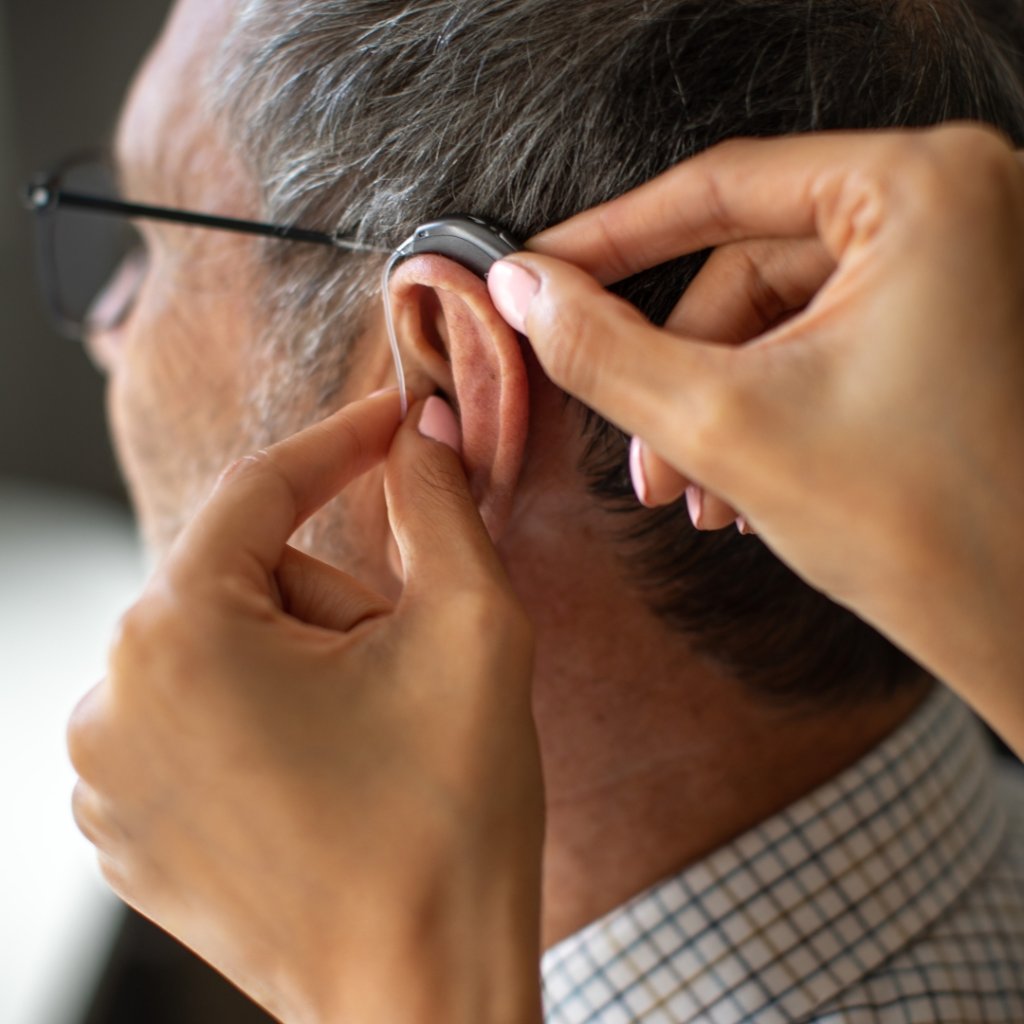
Getting fitted for your first hearing aids is a significant step. What happens in the weeks that follow matters just as much as the fitting itself. Your brain begins adapting how to process sound, your routines form around a new device, and your confidence builds with each week. This guide walks through what to expect at every stage, so life with hearing aids starts to feel like your own.
Everyone’s experience is slightly different. What follows is a general guide to the most common patterns we see.
Week 1: Your Brain Is Relearning How to Hear
The first week as a first-time hearing aid user can feel surprisingly intense. Your brain has spent years adapting to a quieter, muffled version of the world. When clearer sound returns, it needs time to relearn what each familiar setting sounds like. Think of it as your brain resetting its baseline for daily sound. This is expected, and it does settle.
During this first week, you may notice:
- Your own voice sounds unfamiliar: This eases as your brain adjusts to hearing yourself with amplification.
- Chewing and swallowing seem loud: These internal sounds are often the first to feel amplified, and they settle with consistent wear.
- Background noise feels prominent: Your brain is still learning which sounds to prioritise, and this improves as your wear time builds.
Follow the wear schedule recommended by your hearing care professional. Some people gradually increase wear time, while others are encouraged to wear their hearing aids for most of the day from the outset.
Week 2: Finding Your Comfort Zone
By the second week, many first-time wearers are extending their daily hours and moving through more varied environments. This is also when some practical friction points tend to emerge.
Fit comfort is one of the most common, and it can differ depending on the type of hearing aids you are fitted with. If your devices feel sore or loose after extended wear, note when the discomfort occurs and raise this at your next appointment. Handling small components, particularly when inserting or removing your devices, also takes practice. A little patience here pays off quickly.
This is a good week to establish your daily maintenance routine. Regular cleaning keeps your devices performing well and helps extend the life of your hearing aids over the long term. Building this into your morning or evening routine makes it easier to stay consistent.
Week 3: Taking Note of What Is Consistently Affecting You
At this stage of the hearing aids adjustment period, some experiences are still expected. Mild listening fatigue after a busy day is one. Occasional feedback when inserting your devices, and some volume adjustment between quieter and louder settings, are also part of the process.
However, certain signs suggest an earlier appointment:
- Persistent pain or discomfort: Note when this occurs and contact us promptly.
- No improvement in speech clarity: If familiar voices still sound unclear after three weeks, your settings may need adjustment.
- Devices cutting out regularly: Inconsistent performance often points to a technical issue that our team can address.
If your hearing aids start to whistle, raise this at your next appointment too. Feedback of this kind usually has a clear cause and can be resolved quickly.
Use this week to start a simple log of what you notice. The detail gives our team far more to act on than a general sense that something feels off.
Week 4: Getting Used to Living with Hearing Aids
A successful fourth week tends to feel noticeably different from the first. Longer wear times feel more natural. Speech clarity in familiar settings improves, and conversations at home or on the phone are easier to follow. For many first-time wearers, this is the point where hearing aids begin to feel like a natural part of daily life. That shift tends to arrive gradually. Noticing it by week four is a good sign the adjustment is progressing well.
This is also the right time for a fine-tuning appointment. After a full month of real-world use, we can make targeted adjustments based on your actual experience. The more specific your notes, the more useful this appointment will be.
Your First Month Is Just the Beginning at The Listening Lab

Living with hearing aids is a long-term process, and the first month is where the foundation is built. At The Listening Lab, follow-up appointments are a core part of how we support every patient through their hearing journey.
Our audiologists want to hear about your experience. Observations like which environments felt clear and which felt more challenging give us more to work with. What you share shapes the adjustments we make.
The Listening Lab provides hearing aids in Malaysia with audiologists who remain involved in your care well beyond the initial fitting. Book a follow-up appointment and let our team fine-tune your hearing aids, so every conversation feels as clear as it should.